Supafork: What the New Cross-Harness AI Coding Session Store Actually Does
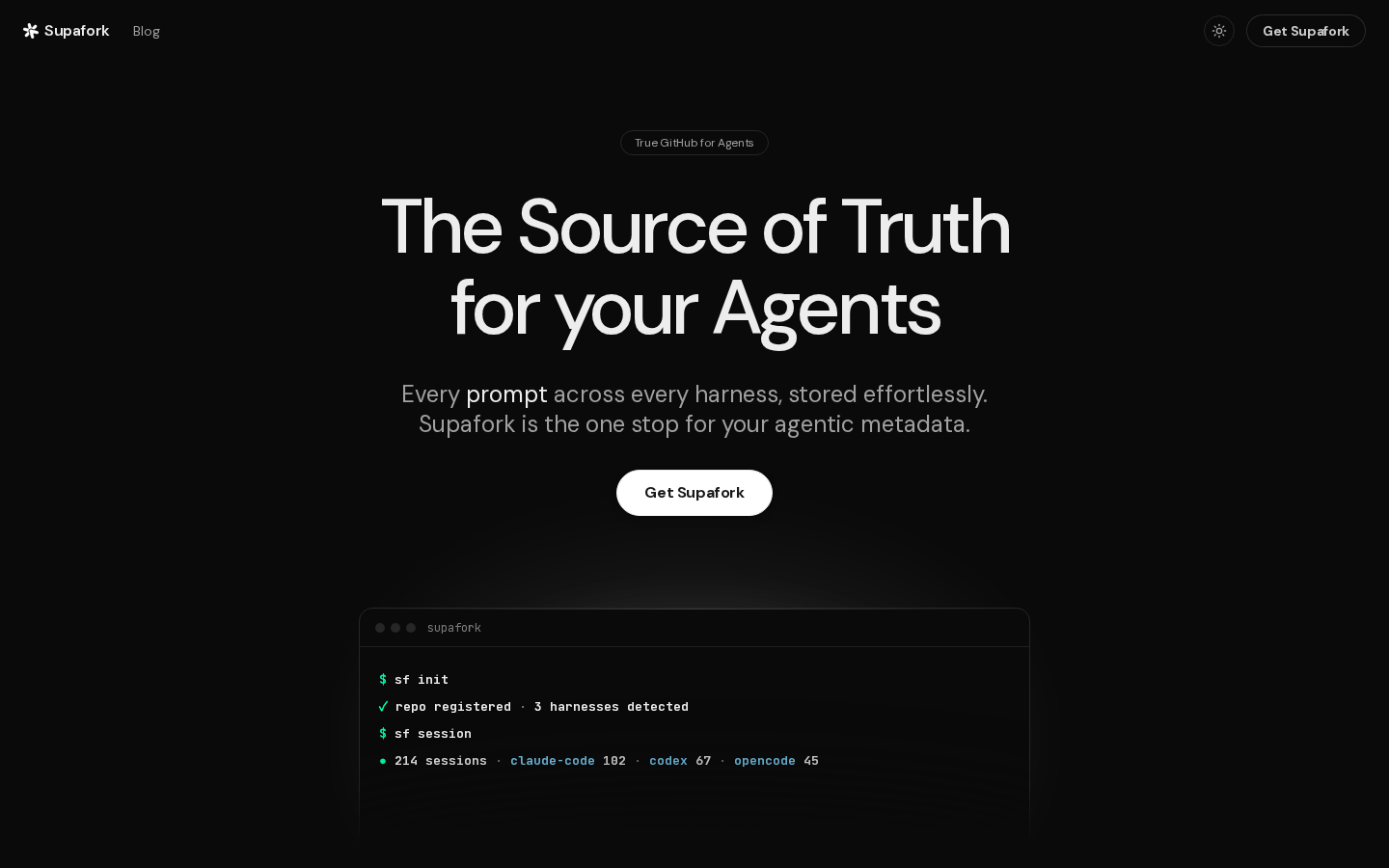
Supafork is a new store for saving, organizing, and sharing AI coding agent sessions across tools like Claude Code, Codex, Gemini CLI, OpenCode, and Pi. It was introduced publicly through a Show HN post after its creator found no simple way to access, reuse, or share a session once it left the machine that ran it. This explains what the launch post actually claims, who the harness list applies to, and what questions it leaves open.
Disclosure: this article contains affiliate links. If you buy through them we may earn a commission at no additional cost to you. Our recommendations are based on the evidence recorded alongside this article, and prices were verified on the date shown.
If you build with AI coding agents and just saw "Supafork" mentioned on Hacker News, here's the short version: it's a new store for saving and sharing agent sessions across tools, built because that capability didn't exist before. It's relevant to you if you use more than one agent harness or want to hand off a session to a teammate; skip reading further if you only care about model pricing, not workflow tooling.
What changed and why it matters
Supafork was introduced publicly through a Show HN post titled "Supafork – Share and Fork Sessions Across Harnesses." The post frames Supafork as a cross-harness store for AI coding agent sessions, with support called out for Claude Code, Codex, Gemini CLI, OpenCode, and Pi, among others.
The news hook is narrow but concrete: the creator says they built it after noticing a specific, checkable gap. Agent sessions produced by these tools stayed local to whichever machine ran them, with no simple way to access, reuse, or share that session with someone else. That's the problem Supafork's launch post claims to solve, and it's why the launch is worth a look if you run agent sessions as part of your daily coding work.
The detail
For anyone meeting Supafork for the first time, the pitch is: you use one or more AI coding agents daily, those agents produce sessions (the saved record of a coding run), and until now those sessions had no home beyond your own disk.
Per Supafork's own site, the feature set covers three stated actions:
| Feature | What it does |
|---|---|
| Save sessions | Stores a complete agent session rather than leaving it local to one machine |
| Collections | Groups related sessions together |
| Publish | Makes a saved session public so others can view or fork it |
The harness list matters because it determines whether Supafork is useful to you at all. Per the launch post, it covers Claude Code, Codex, Gemini CLI, OpenCode, and Pi, among others — so if your workflow runs through one of these, the save-and-publish model applies directly to your sessions.
Best for: developers who already run sessions in more than one of the listed harnesses and want one place to save, group, and publish them instead of leaving each session stranded on whatever machine produced it.
Skip it if: you only need to compare which coding agent to use in the first place rather than where to store sessions afterward — in that case, a guide like Best Continue Alternatives: How to Choose Now is the more useful starting point before you generate sessions worth saving.
What it means for you
The practical implication is about where your AI coding work lives once the session ends. Before Supafork, per its own launch post, there was no simple way to access, reuse, or share a session once you closed the terminal or switched machines. Supafork's answer is to let you save the full session, file it into a collection, and publish it if you want it public.
That's a workflow change, not a model change — Supafork doesn't run the agent for you, it stores and shares what the agent already produced. If you're evaluating your broader AI coding stack at the same time, including where you deploy the projects those agents help you build, you can see current pricing at the merchant See current pricing at the merchant as part of that same research pass.
The decision in front of you isn't whether Supafork is good or bad in the abstract — the launch post doesn't give pricing, limits, or availability details to judge that on. The decision is narrower: does your current set of coding agents match the harness list Supafork supports, and do you have sessions worth saving, grouping, and publishing today? If both are true, the launch is worth tracking as the tool matures. If you're still choosing which agent or hosting setup to standardize on, settle that first — a session store is only useful once you have sessions worth keeping.
What this costs right now
Vercel
The last check on this price fell outside our freshness window, so no figure is shown.
Check the current price at VercelPrices move. We print the figure we read and the moment we read it, and suppress anything older than its window rather than guess at the current number.