Show HN: Supafork Shares AI Agent Sessions
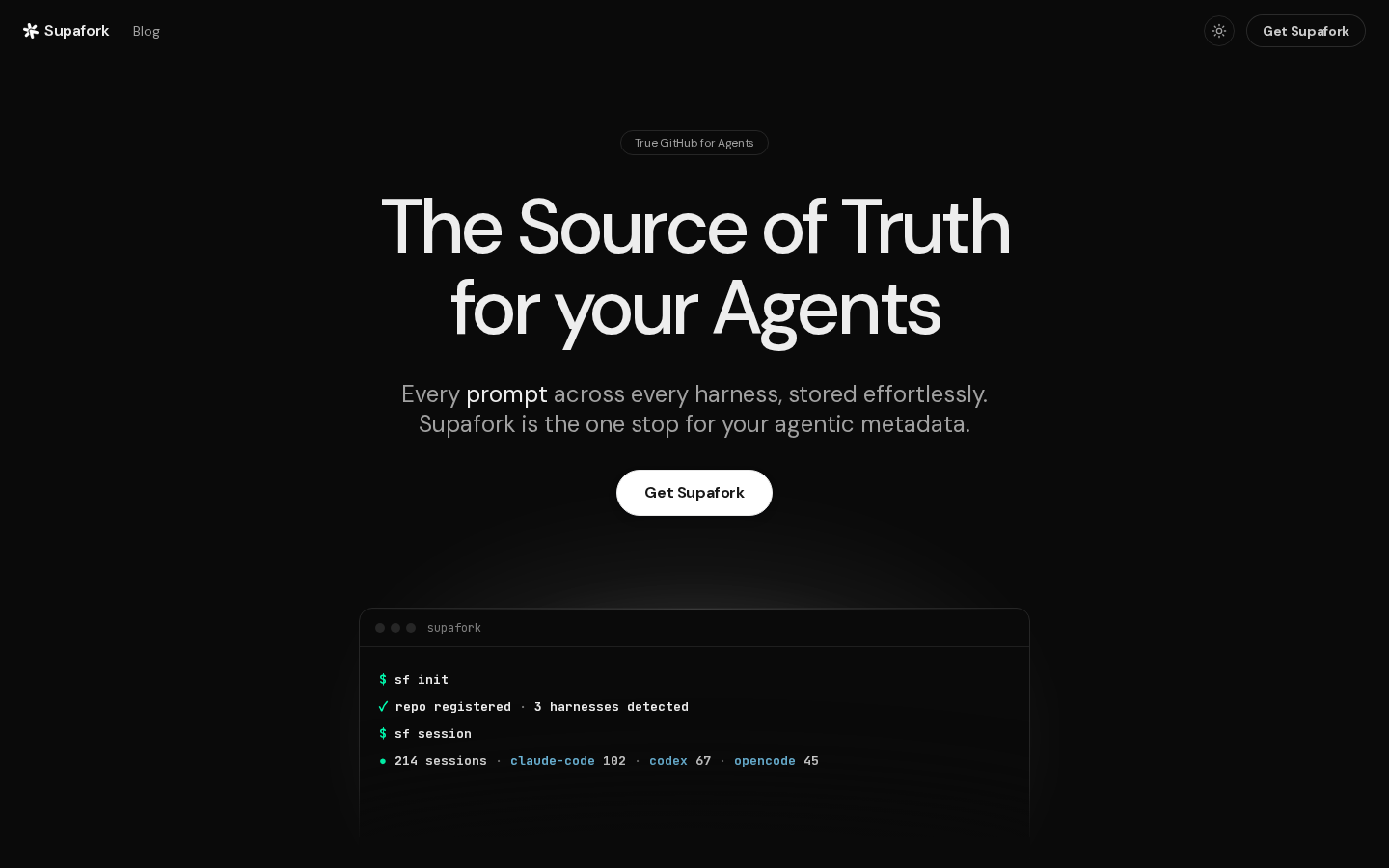
A Show HN post from creator 'supafork' introduced Supafork, a tool for storing and sharing AI agent sessions from Claude Code, Codex, Gemini CLI, OpenCode, and Pi. It matters because sessions from these coding agents normally stay trapped on one local machine, with no simple way to reuse or share them. This piece explains what the tool does, who it's for, and where to check current cloud pricing if you're setting up infrastructure around agent workflows, based on supafork.com as checked on October 5, 2026.
Disclosure: this article contains affiliate links. If you buy through them we may earn a commission at no additional cost to you. Our recommendations are based on the evidence recorded alongside this article, and prices were verified on the date shown.
If you run coding agents and have ever lost track of a useful session because it lived only on one laptop, Supafork is built for you. It is not for people who don't use Claude Code, Codex, Gemini CLI, OpenCode, or Pi — those are the only harnesses it currently supports.
What changed and why it matters
On October 5, 2026, a Show HN post titled "Show HN: Supafork – Share and Fork Sessions Across Harnesses" introduced Supafork, described by its creator (posting under the byline 'supafork') as "one place to store and share AI agent sessions" (source). The post came from the product's own creator, not from a third-party reviewer, so the claims below trace back to that single primary source.
The hook is specific: coding agents like Claude Code, Codex, Gemini CLI, OpenCode, and Pi each run sessions that, by default, live only on the machine where you started them. The creator built Supafork after running into that exact limit — no simple way to access, reuse, or share a session once it was created (source). If you've ever wanted to hand a teammate your exact agent conversation instead of re-explaining the problem from scratch, that's the gap this fills.
The detail
Supafork's core functionality, as confirmed by the source, is narrow and specific: it saves complete agent sessions and lets you organize them into collections (source). It is not a new coding agent itself — it's a storage and sharing layer that sits underneath the agents you already use.
Here's what that means in practice, based on what the source confirms:
| What Supafork does | Confirmed by source |
|---|---|
| Stores complete agent sessions | Yes |
| Organizes sessions into collections | Yes |
| Supports Claude Code | Yes |
| Supports Codex | Yes |
| Supports Gemini CLI | Yes |
| Supports OpenCode | Yes |
| Supports Pi | Yes |
Best for: developers who already use one or more of those five harnesses and want a session to outlive the local machine it started on — for review, handoff, or reuse later.
Skip it if: your coding agent isn't one of the five named harnesses, or you have no need to move a session off the machine where it ran. The source doesn't describe support for any other agent, and nothing in the Show HN post claims otherwise.
Because this is a creator's own Show HN announcement, treat it as a first look rather than an independent verdict. No pricing, usage limits, or availability details appear in the source, so none are stated here — check the product page directly at supafork.com for anything not covered above.
What it means for you
If storing and sharing agent sessions becomes part of how you work, the next practical question is where those sessions — and the agents producing them — actually run. Coding agents like Codex and OpenCode are often run against cloud compute rather than a personal laptop, especially once a team wants a shared, always-on setup instead of one person's machine holding the only copy.
That's the GitHub-and-ai-tools research path this topic sits in: once you're looking at tools for storing and forking agent sessions, you're usually also looking at where to host the agents themselves. You can see current pricing for cloud droplets and compute plans suited to that kind of setup at See current pricing at the merchant, which is worth checking before you commit to a specific instance size or region.
If you're still comparing which coding agent or agent-adjacent tool fits your workflow before you worry about hosting, our guide Best Continue Alternatives: How to Choose Now walks through the selection criteria at a higher level — useful background if Supafork's five supported harnesses don't yet include the tool you're standing on.
The decision in front of you isn't whether Supafork's idea is useful — storing sessions outside a single machine clearly solves a real problem for anyone using these five harnesses. It's whether you need that specific capability today, and if so, whether your current setup can host the agents feeding it. Start with the harness you already use: if it's Claude Code, Codex, Gemini CLI, OpenCode, or Pi, Supafork's stated feature set — session saving and collections — is worth a direct look at the source. If it isn't one of those five, there's nothing in the current announcement for you yet, and the next move is checking back as the project adds support rather than assuming it already covers your tool.
What this costs right now
DigitalOcean
The last check on this price fell outside our freshness window, so no figure is shown.
Check the current price at DigitalOceanPrices move. We print the figure we read and the moment we read it, and suppress anything older than its window rather than guess at the current number.