Show HN: Chloe, a TypeScript AI Agent, Explained
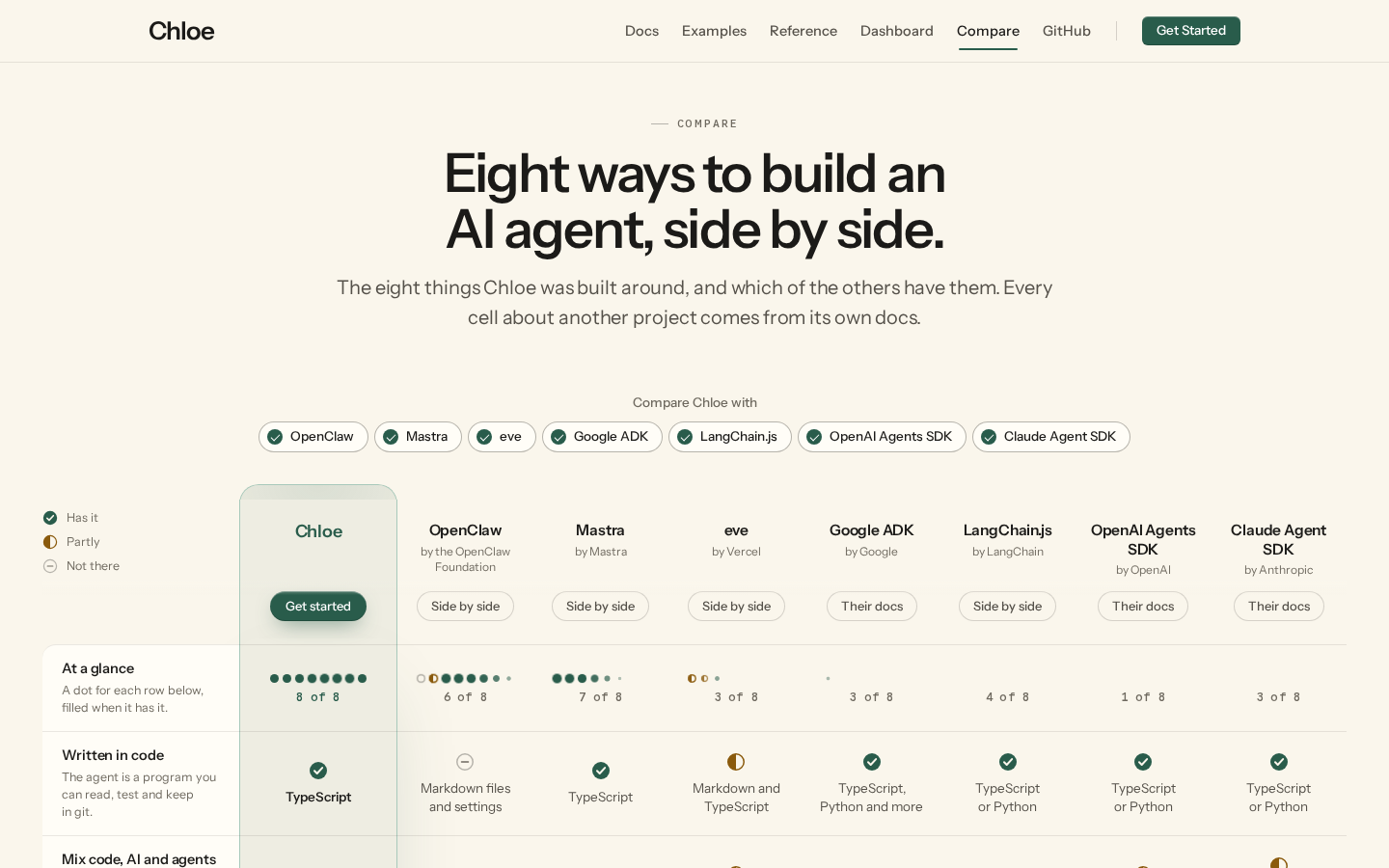
A Show HN post titled "Chloe is a TypeScript AI agent" points to chloejs.org/compare and argues businesses want control over their agent's code instead of depending on Meta, OpenAI, or Anthropic. This piece explains who posted it, the two problems it claims to solve, and what the control-versus-cost tradeoff means if you're deciding whether to build your own agent or rent one. It also flags where to check current hosting costs before you commit to running that code yourself.
Disclosure: this article contains affiliate links. If you buy through them we may earn a commission at no additional cost to you. Our recommendations are based on the evidence recorded alongside this article, and prices were verified on the date shown.
If you're evaluating whether to build an in-house AI agent instead of renting one from a large provider, the Show HN post for Chloe is a fifteen-minute read worth having. If you need a supported, pre-built agent platform with a vendor on the hook for uptime, this one isn't aimed at you — skip ahead to a managed option instead.
What changed and why it matters
A Show HN submission titled "Chloe is a TypeScript AI agent" went up from a user with the byline carlosmartinezt, linking to chloejs.org/compare as the project's explainer page. The post identifies the author as a forward-deployed engineer at Meta who spent the past two years working directly with businesses implementing AI agents.
That background is the reason the post is worth reading rather than skimming. It isn't a weekend side project pitching a new wrapper around an LLM API — it's framed as a response to two specific complaints the author says came up repeatedly while embedded with businesses building agents: control over the agent's internals, and the cost of making an LLM do work it doesn't need to do.
The detail
The post states two problems directly, and both are about what businesses were not getting from existing providers.
The first is control. Businesses wanted ownership of their agent's code, its tools, and its skills — the pieces that decide what the agent can actually do — rather than having those pieces live inside a platform owned by Meta, OpenAI, or Anthropic. The post frames this as a dependency problem: if the logic lives in someone else's product, you're building on ground you don't control.
The second is cost. The author argues that routing every step of an agent's workflow through an LLM call is unnecessarily expensive, because many of the routines an agent runs don't need a model to decide what happens next. A fixed lookup, a conditional branch, a known sequence of tool calls — none of that requires inference if the logic is written in code instead of delegated to a prompt.
Here's the tradeoff as the post states it:
| Concern | Vendor-hosted agent (Meta, OpenAI, Anthropic) | Chloe's pitch |
|---|---|---|
| Who controls the code, tools, and skills | The provider's platform | The business, per the post |
| Cost driver | Every agent step can trigger an LLM call | Only steps that need a model call one |
That's the entire comparison the source material supports — the post doesn't publish benchmarks, pricing, or a feature list for Chloe itself, so there's nothing further to verify here about specs or performance claims.
If you're also weighing control-versus-convenience on the coding-assistant side of your stack, not just the agent-framework side, Best Continue Alternatives: How to Choose Now walks through the same tradeoff for that category.
What it means for you
The practical fork in the road is this: renting an agent from a provider trades control for someone else maintaining the infrastructure. Writing your own agent in code, the way the Show HN post argues for, trades that convenience for owning both the logic and the hosting.
If you take the second path, the code still has to run somewhere, and the hosting bill becomes part of your decision in a way it isn't when you're paying a provider for a managed agent. Before you commit engineering time to a self-hosted agent, it's worth checking See current pricing at the merchant to see Vercel's current plans and pricing, since that's the kind of cost that determines whether owning your agent's code actually saves money once you count the infrastructure next to it.
Skip this route if your team doesn't have the capacity to own an agent's uptime, tooling, and debugging — the post's own framing is that this tradeoff was built for businesses that specifically wanted that ownership, not a drop-in replacement for a managed service. If that's not your situation, a vendor-hosted agent remains the simpler starting point, even though it costs more per LLM-routed step.
What this costs right now
Vercel
The last check on this price fell outside our freshness window, so no figure is shown.
Check the current price at VercelPrices move. We print the figure we read and the moment we read it, and suppress anything older than its window rather than guess at the current number.