Show HN Aura: Rust Incident-Response Agent Explained
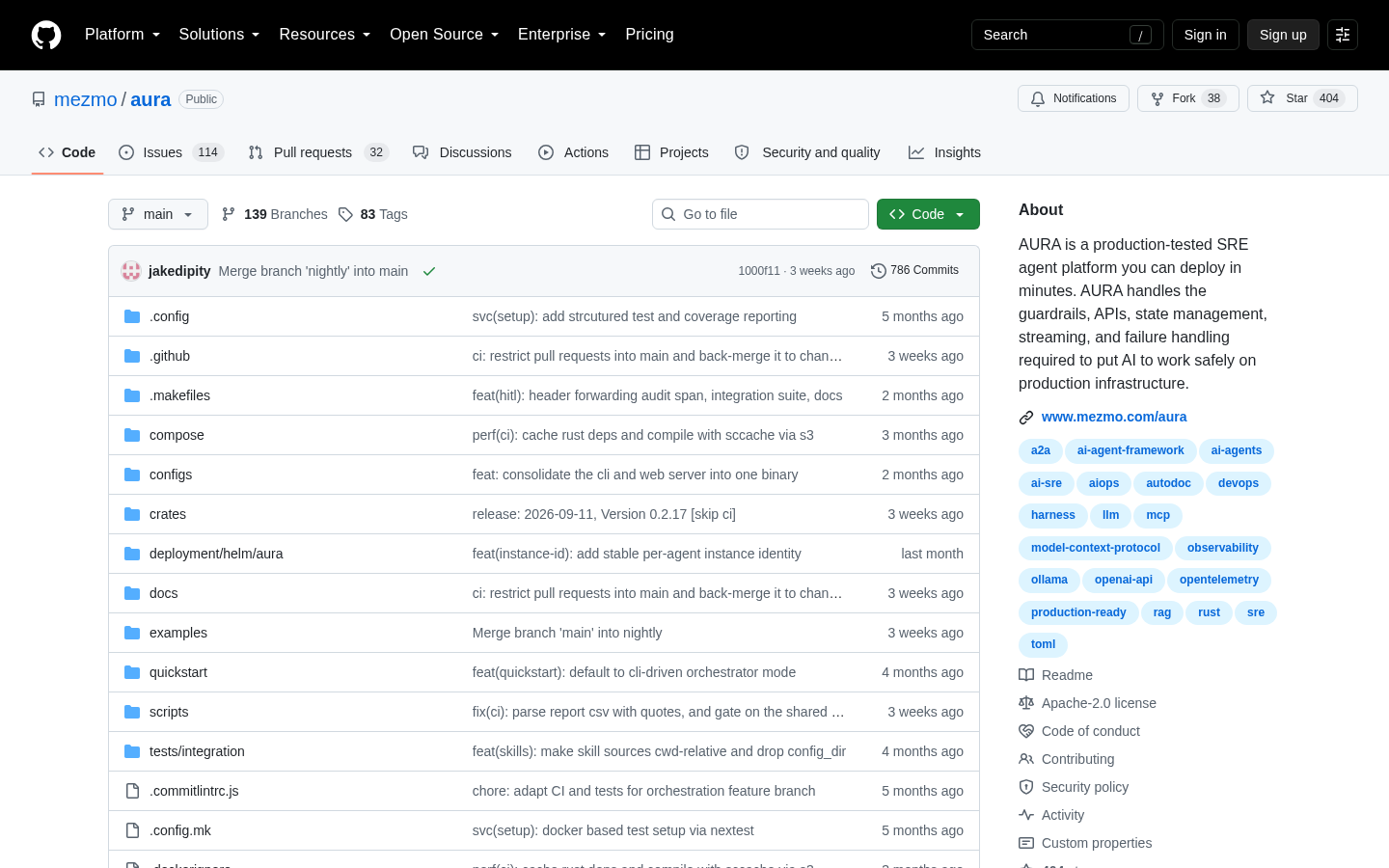
Aura is a Rust agent posted to Show HN by user jvogt, built to investigate and fix production incidents, with code hosted at github.com/mezmo/aura. It matters because its creators run a petabyte-scale SaaS and rejected Claude, openclaw, and LangChain after hitting context overflow, 'lethal trifecta' security exposure, hallucinations, and heavy token spend before building their own tool. This piece explains what the GitHub listing actually states, what problem it solves, and where to check current hosting and AI-too
Disclosure: this article contains affiliate links. If you buy through them we may earn a commission at no additional cost to you. Our recommendations are based on the evidence recorded alongside this article, and prices were verified on the date shown.
What changed and why it matters
A Rust agent called Aura appeared on Show HN, submitted by user jvogt, with its code and project page hosted at github.com/mezmo/aura. The listing describes it plainly: an agent built specifically to investigate and fix production incidents, not a general-purpose assistant adapted for the job.
What makes this worth your attention is who built it and why. According to the Show HN post, the team runs a SaaS operating at petabyte scale, and their SRE group tried three existing options — Claude, openclaw, and LangChain — inside real incident-response workflows before deciding to build Aura from scratch. That sequence (try the general-purpose tools first, then build) is the signal that something specific about on-call incident work wasn't served by the frameworks already on the market.
The detail
If you're meeting Aura for the first time: it's a Rust agent, and its stated job is narrow — investigate a production incident, then fix it. The GitHub listing is the primary source for this, and as of the capture on 2026-10-05 it is the only public reference point for the project.
The more useful part of the post, for anyone evaluating agent frameworks for operational work, is the list of specific failures the team cites from their earlier attempts with Claude, openclaw, and LangChain:
| Problem cited by the team | Why it matters in an incident |
|---|---|
| Context overflow | Long incident threads and logs exceed what general agents can hold in a working context |
| 'Lethal trifecta' security exposure | A named security risk pattern the team flagged when giving an agent broad access during live incidents |
| Hallucinations | Confident wrong answers during an outage cost time you don't have |
| High frontier-model token spend | Trivial diagnostic steps were running on expensive frontier models |
| Approval fatigue | Constant permission prompts in production wore down the humans supervising the agent |
That last row is the one worth sitting with. The team's response to approval fatigue was not to loosen production permissions to make the prompts go away — the post is explicit that they refused to relax access controls as a workaround. Instead, building a purpose-specific agent was the path they chose. That's a meaningfully different decision than the common industry shortcut of widening an agent's permissions until it stops asking questions, and it's the detail that separates this project from a weekend hack: the hard line on production access stayed in place.
For readers who already run general-purpose agents in their own stack, the five failure modes above function as a checklist. If your current setup has only hit one or two of them, a purpose-built replacement like Aura may be premature. If you recognize three or more — especially approval fatigue combined with context overflow on long logs — that's the pattern Aura's creators say pushed them to build their own tool rather than keep patching someone else's.
What it means for you
Aura itself is free, open-source code on GitHub — there's no price to report here, and the evidence doesn't state one. The buying decision this story actually implies sits one layer up: where you run the agents, dashboards, and AI tooling you build around incident response.
If you're assembling that stack, the comparison question is less "which agent" and more "which platform hosts it reliably while you iterate." That's the ai-tools category Vercel sells into, and See current pricing at the merchant to see what its current plans and limits actually cover before you commit infrastructure to a new workflow. Best for: teams already shipping on a modern frontend/serverless stack who want their incident tooling deployed next to the rest of their app rather than bolted onto separate infrastructure. Skip it if: your incident-response tooling needs to run inside a locked-down production network with no external platform in the loop — that constraint is exactly the kind of production-permission boundary the Aura team drew a hard line around, and it's a decision only you can make for your own environment.
If you're still comparing general-purpose agent frameworks before deciding whether you need something as narrow as Aura, the breakdown in Best Continue Alternatives: How to Choose Now walks through the same kind of framework-selection tradeoffs — useful background before you decide whether to adopt, adapt, or build.
The decision in front of you isn't whether Aura is good — it's whether your own incident workflow has hit enough of the five failure modes above to justify a dedicated agent, and whether your hosting platform can support that experiment without you first discovering its limits during an outage.
What this costs right now
Vercel
The last check on this price fell outside our freshness window, so no figure is shown.
Check the current price at VercelPrices move. We print the figure we read and the moment we read it, and suppress anything older than its window rather than guess at the current number.