Rebuno: An Open Execution Runtime for AI Agents
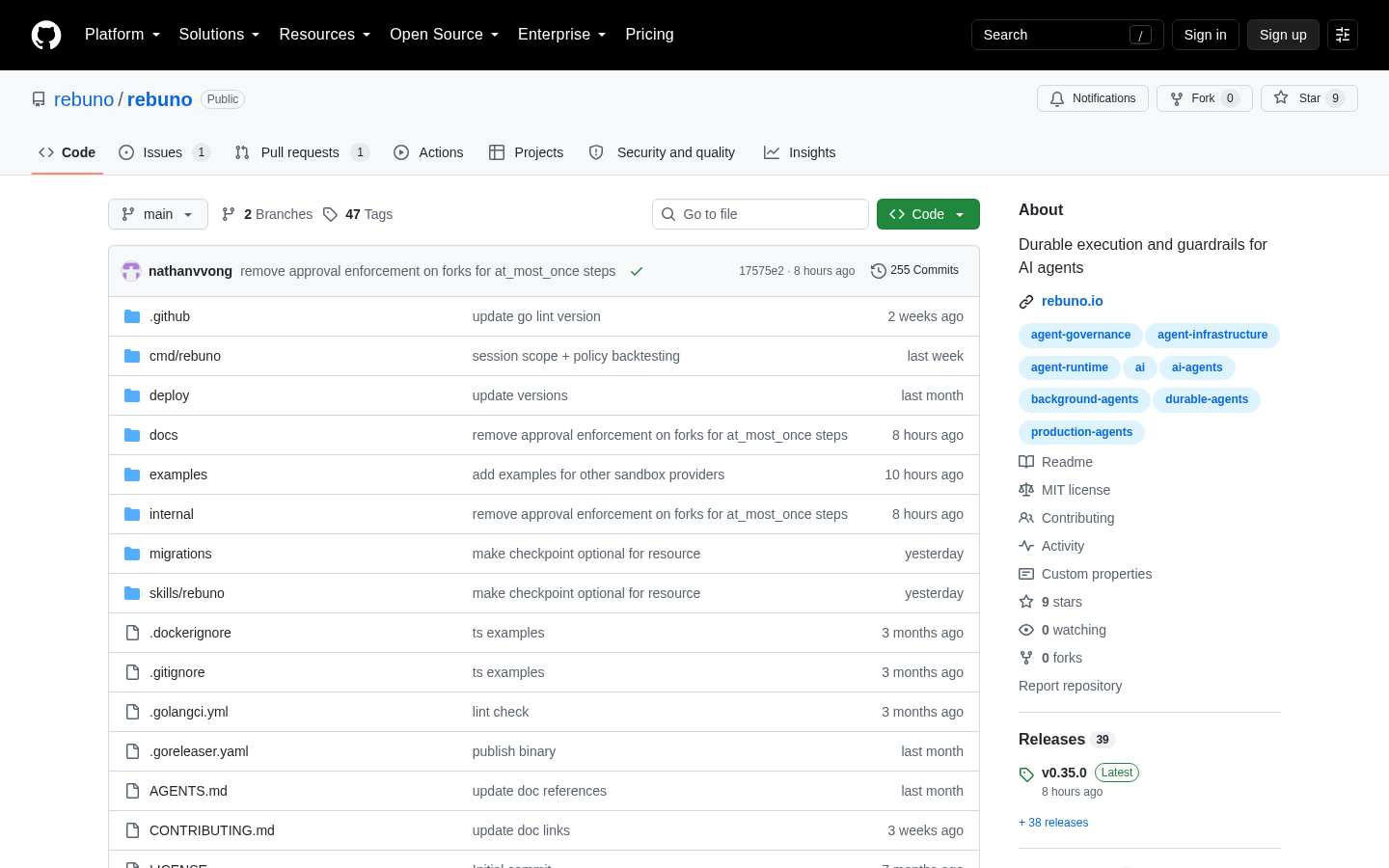
Rebuno is a newly published open-source execution runtime built to run AI agents in production rather than just in local or dev environments, with its full code available on GitHub. It matters because it works across different agent frameworks instead of locking you into one, using signed webhooks and Postgres-backed state to add guardrails at the tool-call level. This piece breaks down how Rebuno's HTTP-service integration model actually works, who should consider self-hosting it, and where to check current Vercel
Disclosure: this article contains affiliate links. If you buy through them we may earn a commission at no additional cost to you. Our recommendations are based on the evidence recorded alongside this article, and prices were verified on the date shown.
Rebuno is for teams running AI agents in production who need one guardrail layer across multiple agent frameworks, not just a single SDK. It's an open-source execution runtime, not a hosted-only product, and the code is public now.
What changed and why it matters
Rebuno's entire codebase is published at github.com/rebuno/rebuno, and the project was introduced to developers as a Show HN post by a Hacker News user going by nnww. That's the checkable fact worth starting from: nothing about Rebuno is a closed beta or a waitlist pitch — you can read the source today.
Why that matters: Rebuno is built specifically to operate AI agents in production, as opposed to local or dev-only use. A lot of agent tooling stops at "works on my laptop." Rebuno's stated purpose is the harder problem — running agents as live services, with execution state and guardrails that survive restarts, retries, and multiple agents built on different frameworks talking to the same runtime.
The detail
If you're meeting Rebuno for the first time, the mental model is simpler than the name suggests. Rebuno is framework-agnostic: it manages execution state and guardrails across agents built with different agent frameworks, so it doesn't require you to standardize on one SDK before you get the benefit.
Agents integrate with Rebuno by running as HTTP services. Instead of an agent silently calling a tool or a model on its own, it submits that tool call or model call to Rebuno as a discrete step before execution actually happens. That step is the hook point — it's where a guardrail can inspect, approve, or block a call before it runs, rather than after the damage is done.
Once a step is approved, Rebuno dispatches the work to the agent through signed webhooks. Signing the webhook call implies a verifiable, authenticated path between Rebuno and the agent services it runs, which matters if you're running agents across separate hosts or separate teams and need to know a dispatched call actually came from your runtime and not from somewhere else.
None of this state lives in memory. Rebuno keeps execution state in Postgres, which means adopting it isn't just "add a package" — it's a real infrastructure decision. You need a Postgres database running or reachable before Rebuno does anything useful.
What it means for you
Before you adopt Rebuno, the deciding criteria are mostly about what you already run and what you're willing to self-host:
| Criteria | Rebuno |
|---|---|
| Deployment model | Self-hosted, open source (github.com/rebuno/rebuno) |
| Framework support | Framework-agnostic across agent frameworks |
| Integration method | Agents run as HTTP services, submit steps before execution |
| Dispatch mechanism | Signed webhooks |
| State storage | Postgres required |
Best for: teams already running agents from more than one framework in production, who want a single place to enforce guardrails on tool and model calls before they execute, and who already run or are comfortable running Postgres.
Skip it if: you want a fully managed product with no infrastructure to operate, or you're still prototyping a single agent locally and don't yet need production-grade dispatch and state persistence.
The Postgres requirement is the practical fork in the road. If you're already deciding where to host the database and the HTTP services Rebuno depends on, you can See current pricing at the merchant before you commit infrastructure budget to this. And if your evaluation is really about the broader AI tooling stack rather than just the runtime layer, Best Continue Alternatives: How to Choose Now walks through how to weigh options when you're comparing AI development tools side by side.
The decision in front of you isn't whether Rebuno is good engineering — the public repo and the webhook-signing design suggest it was built by someone solving a real production problem. The decision is whether you're ready to run Postgres and host HTTP agent services for it today, or whether you're still at the stage where a single framework and local execution is enough. If you're past that stage, Rebuno is worth cloning and reading before you build your own guardrail layer from scratch.
What this costs right now
Vercel
The last check on this price fell outside our freshness window, so no figure is shown.
Check the current price at VercelPrices move. We print the figure we read and the moment we read it, and suppress anything older than its window rather than guess at the current number.