Nightshift: A Rust CLI That Orchestrates GitHub Issues With DAGs
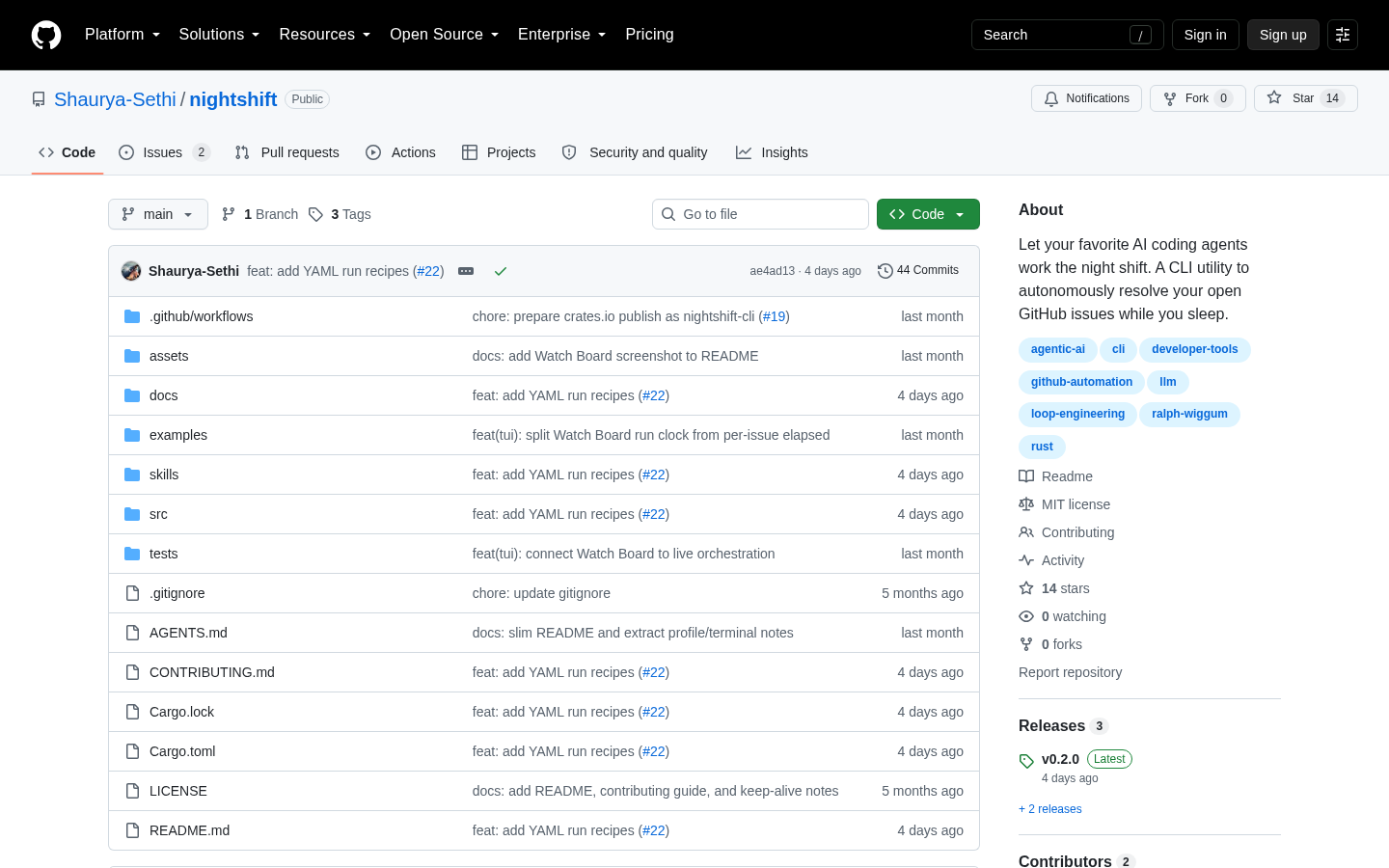
A developer posted Nightshift, a Rust command-line tool, to Hacker News under the username shaurya-sethi. The tool orchestrates GitHub Issue resolution using a directed acyclic graph instead of a single continuous goal loop, and its creator describes it as agent-agnostic rather than tied to one AI provider. The repository is public at github.com/Shaurya-Sethi/nightshift, so you can check the claims yourself before deciding whether its DAG approach fits your own multi-issue workflow.
Disclosure: this article contains affiliate links. If you buy through them we may earn a commission at no additional cost to you. Our recommendations are based on the evidence recorded alongside this article, and prices were verified on the date shown.
A developer posted "Show HN: Nightshift – Rust CLI to Orchestrate GitHub Issue Resolution with Dags" to Hacker News under the username shaurya-sethi, linking to the project's source at github.com/Shaurya-Sethi/nightshift. The name states the mechanism plainly: Nightshift resolves GitHub Issues by running them through a directed acyclic graph (DAG), and it does this as a command-line binary written in Rust, not as a hosted web app.
That last detail is the news hook. Most tools pitching "AI finishes your issues" right now ship as a SaaS dashboard wrapped around one AI vendor's API. Nightshift ships as a CLI you install and run yourself, and its creator describes it as agent-agnostic — not wired to a single model provider by design. If you're tracking how AI coding-agent tooling is moving past single-prompt fixes, that shift from hosted agent to developer-controlled orchestrator is the part worth noting.
What changed and why it matters
The submission is a single data point: one creator, one repository, one Show HN thread. But it's a checkable one. The repo is public at github.com/Shaurya-Sethi/nightshift, the tool is Rust-based rather than a hosted product, and it targets GitHub Issues specifically rather than generic chat-based coding help.
The creator's stated reason for building it adds the context that explains why this isn't just another wrapper. A couple of months before posting, they tried OpenAI's and Anthropic's /goal feature for long-horizon tasks and found it didn't hold up. They say they identified what they call a major architectural flaw in using /goal-style, single-continuous-loop approaches for complex, multi-issue workflows — and built Nightshift's DAG structure as the alternative.
The detail
For a reader meeting this for the first time, the two words that matter are "DAG" and "agent-agnostic."
A directed acyclic graph lets Nightshift express dependencies between issues — issue B can't start until issue A resolves, issue D might depend on both B and C — and schedule work accordingly. That's a structural difference from a /goal-style feature, which runs as one continuous loop toward a single stated objective and has no native concept of branching, dependent sub-tasks across multiple issues.
"Agent-agnostic" means Nightshift isn't locked to a specific AI provider's API. The orchestration logic — which issue runs when, what depends on what — lives in the CLI, not in the model.
| Nightshift | /goal-style feature | |
|---|---|---|
| Form | Rust CLI, self-hosted | Built into the AI provider's product |
| Structure | DAG — dependent, multi-issue | Single continuous goal loop |
| Provider lock-in | Agent-agnostic, per creator | Tied to that provider's agent |
Best for: developers who run several related GitHub Issues with real dependencies between them and want the scheduling logic in a tool they control rather than inside one vendor's agent.
Skip it if: you want a managed, no-install product, or your workflow is genuinely a single long-running goal rather than multiple dependent issues — the use case the creator says /goal-style features were built for in the first place.
What it means for you
The practical implication isn't about Nightshift's CLI itself — there's no pricing or hosting involved in running a Rust binary against your own repo. It's about everything downstream of it. Once you're orchestrating multi-step AI-agent work against GitHub Issues, you're usually also shipping the surfaces that consume that work: a status dashboard, an API endpoint the DAG calls into, a small internal tool your team checks. Those need somewhere to run.
If you're evaluating where to deploy that layer, see current Vercel pricing at See current pricing at the merchant before you commit a stack to it — plan limits and included usage change, and it's worth confirming what's current rather than working from an old screenshot.
The agent-agnostic design also points toward a related question: if you want a coding assistant that isn't tied to a single vendor's agent, compare Continue alternatives to find the right fit for your stack.
The decision in front of you isn't whether Nightshift is good; it's one data point from one Show HN post. The decision is whether your own issue-resolution workflow has the kind of cross-issue dependencies a DAG is built for, or whether a simpler single-goal loop already covers what you need. If it's the former, a self-hosted, provider-agnostic orchestrator is the right category to be looking in, regardless of which specific tool you end up running.
What this costs right now
Vercel
The last check on this price fell outside our freshness window, so no figure is shown.
Check the current price at VercelPrices move. We print the figure we read and the moment we read it, and suppress anything older than its window rather than guess at the current number.