How to Choose Proval for Self-Hosted Code Review
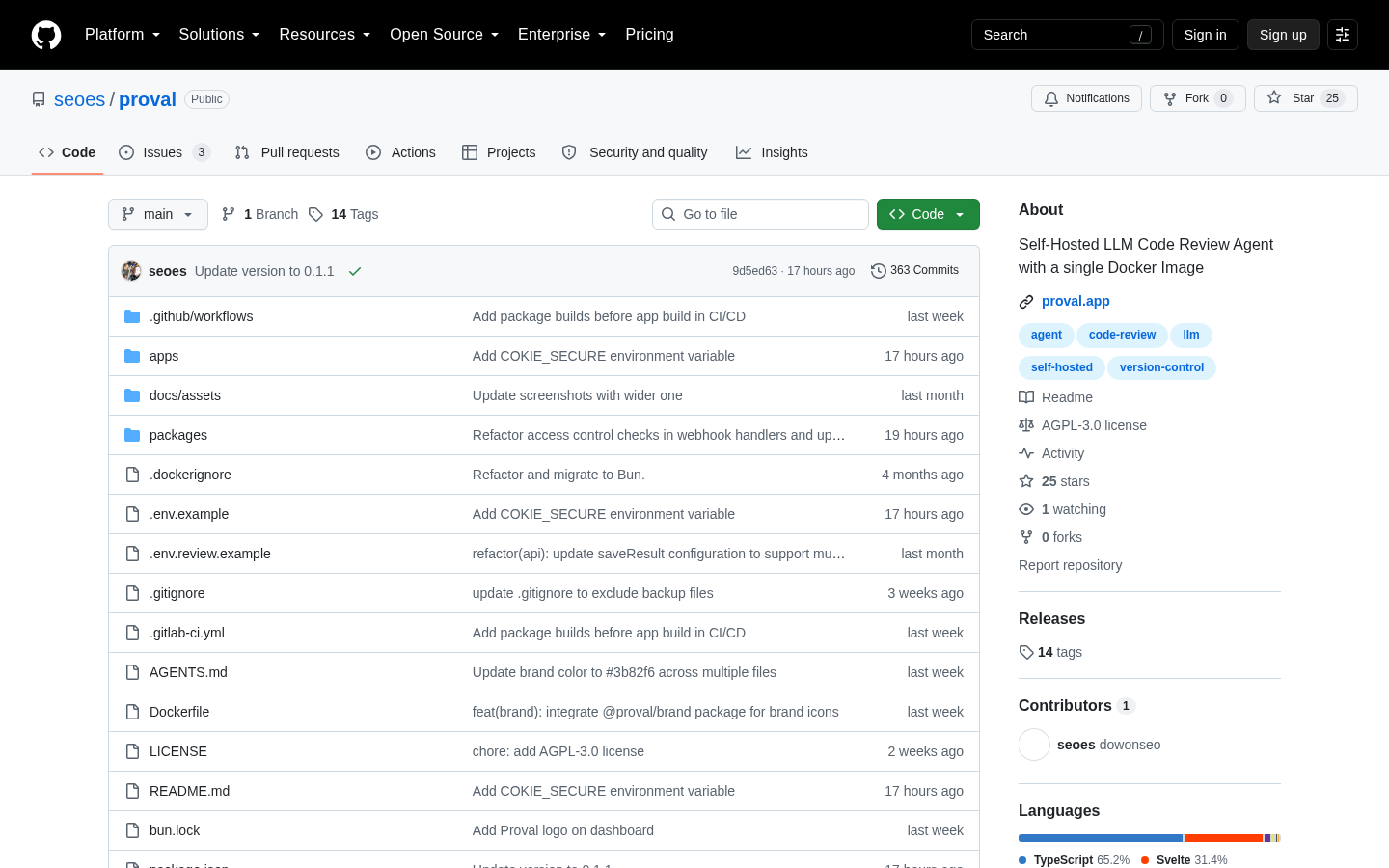
Proval, a self-hosted code review agent that supports GitLab, Forgejo, and GitHub, was posted to Show HN by user dowonseo, with its source and documentation confirmed only at github.com/seoes/proval as of a check on August 28, 2026. That single-channel distribution matters if you are weighing a tool you run yourself against a hosted code-review SaaS product. This guide lays out the criteria that separate a workable self-hosted deployment from a stalled one, names the one verified option on the table, and points you
Disclosure: this article contains affiliate links. If you buy through them we may earn a commission at no additional cost to you. Our recommendations are based on the evidence recorded alongside this article, and prices were verified on the date shown.
What changed and why it matters
A project called Proval showed up on Show HN, posted by user dowonseo, describing itself as a self-hosted code review agent. The distinguishing detail is platform coverage: Proval targets GitLab, Forgejo, and GitHub, rather than locking you into a single hosting platform the way many review tools do. The only confirmed source for the code and documentation is github.com/seoes/proval — no other distribution channel is verified.
That matters if your team already runs GitLab or Forgejo internally, because most code-review tooling that gets attention on Show HN is built GitHub-first and treats everything else as an afterthought. It also matters because "self-hosted" shifts real costs onto you: server time, maintenance, and the infrastructure decision underneath it. If you're evaluating Proval, you're really evaluating two things at once — the tool, and where you're going to run it.
What to look for
When a tool is this new and this thinly documented in public, the evaluation criteria are less about feature checklists and more about what you can actually verify before you commit engineering time. In priority order:
- Platform coverage matches your stack. Confirm the tool supports the exact platform and version you run — GitLab, Forgejo, or GitHub — not just a generic claim of "supports Git."
- Deployment model fits your ops capacity. Self-hosted means you own uptime, upgrades, and access control. If nobody on your team wants to own another running service, that's a real cost before you look at anything else.
- Distribution channel is singular and traceable. A tool with one confirmed source repository is easier to audit than one scattered across mirrors, but it also means there's no fallback if that repository goes dark. Check the repository directly rather than trusting a summary.
- Documentation exists for the setup you need. Before adopting, verify the repository has installation and configuration instructions for your specific platform (GitLab vs. Forgejo vs. GitHub), since "supports three platforms" can mean uneven depth across them.
- Total cost of ownership, not just the tool's price. A self-hosted agent has no license fee to compare, but it does have a hosting bill. That bill is a separate purchase decision from the tool itself, and it's where most of the ongoing cost actually sits.
For the specific checks worth running against the repository before you deploy anything, see Proval Self-Hosted Code Review: What to Check First.
| Criterion | What to check | What's confirmed for Proval |
|---|---|---|
| Platform coverage | Does it support your exact Git host? | GitLab, Forgejo, and GitHub |
| Deployment model | SaaS or self-hosted? | Self-hosted — runs on infrastructure you control |
| Source authenticity | One official channel or many? | github.com/seoes/proval, no other channel confirmed |
| Origin | Who built and posted it? | Posted to Show HN by user dowonseo |
Recommended options
There is one verified option to evaluate here, because it's the only one with sourced facts behind it. The decision isn't "Proval vs. a named competitor" — it's whether a self-hosted, multi-platform reviewer fits your situation, and where you'd run it if it does.
Proval
- Best for: teams running GitLab or Forgejo (not just GitHub) who want code review handled by infrastructure they control rather than a third-party SaaS pipeline touching their source.
- Skip it if: you need a plug-and-play hosted product with no server to manage, or you can't verify — directly from github.com/seoes/proval — that the setup instructions cover your specific platform version before you commit time to a deployment.
Running Proval yourself means picking a place to run it. That's a separate line item from the tool itself, and it's the part most buyers underprice. A VPS provider like DigitalOcean is a common choice for exactly this kind of self-hosted service — a single process that needs to stay up, take webhooks from your Git host, and not require a full ops team to babysit it. Whichever provider you pick, size the instance to your review volume and factor the monthly hosting bill into what "self-hosted" actually costs you, since that number sits outside anything the Proval repository itself documents.
Common mistakes
Assuming self-hosted means free. The tool has no license fee attached to the facts available, but self-hosted still means a server, and that server has a monthly bill whether you remembered to budget for it or not. See current pricing at the merchant shows you what that bill actually looks like right now, before you commit to a deployment plan built on guesswork.
Trusting a mirror or a blog summary over the source. With only one confirmed distribution channel for Proval, treat anything else — a package index, a random fork, a third-party write-up — as unverified until you've checked github.com/seoes/proval directly.
Assuming platform support is evenly deep. "Supports GitLab, Forgejo, and GitHub" is a coverage claim, not a depth claim. Confirm the setup docs actually walk through your platform before you build a rollout plan around it.
Skipping the ops conversation. A self-hosted agent needs someone to own upgrades, restarts, and access control. Decide who that is before deployment, not after the first outage.
Comparing on price alone. Because there's no published price for Proval itself, buyers sometimes default to comparing hosting quotes and calling it done. The hosting bill is real, but it's only half the total cost — the other half is the engineering time to deploy, configure per-platform, and maintain it.
The decision that actually matters here isn't which tool has the flashiest feature list — it's whether your platform mix (GitLab, Forgejo, GitHub, or some combination) and your team's appetite for running one more service point you toward self-hosting at all. If they do, Proval is the one option with verified platform coverage worth checking against your own setup before you write any deployment plan.
What this costs right now
DigitalOcean
The last check on this price fell outside our freshness window, so no figure is shown.
Check the current price at DigitalOceanPrices move. We print the figure we read and the moment we read it, and suppress anything older than its window rather than guess at the current number.