Benzi Show HN Post Frames the Token and Latency Cost of AI Coding-Agent Context
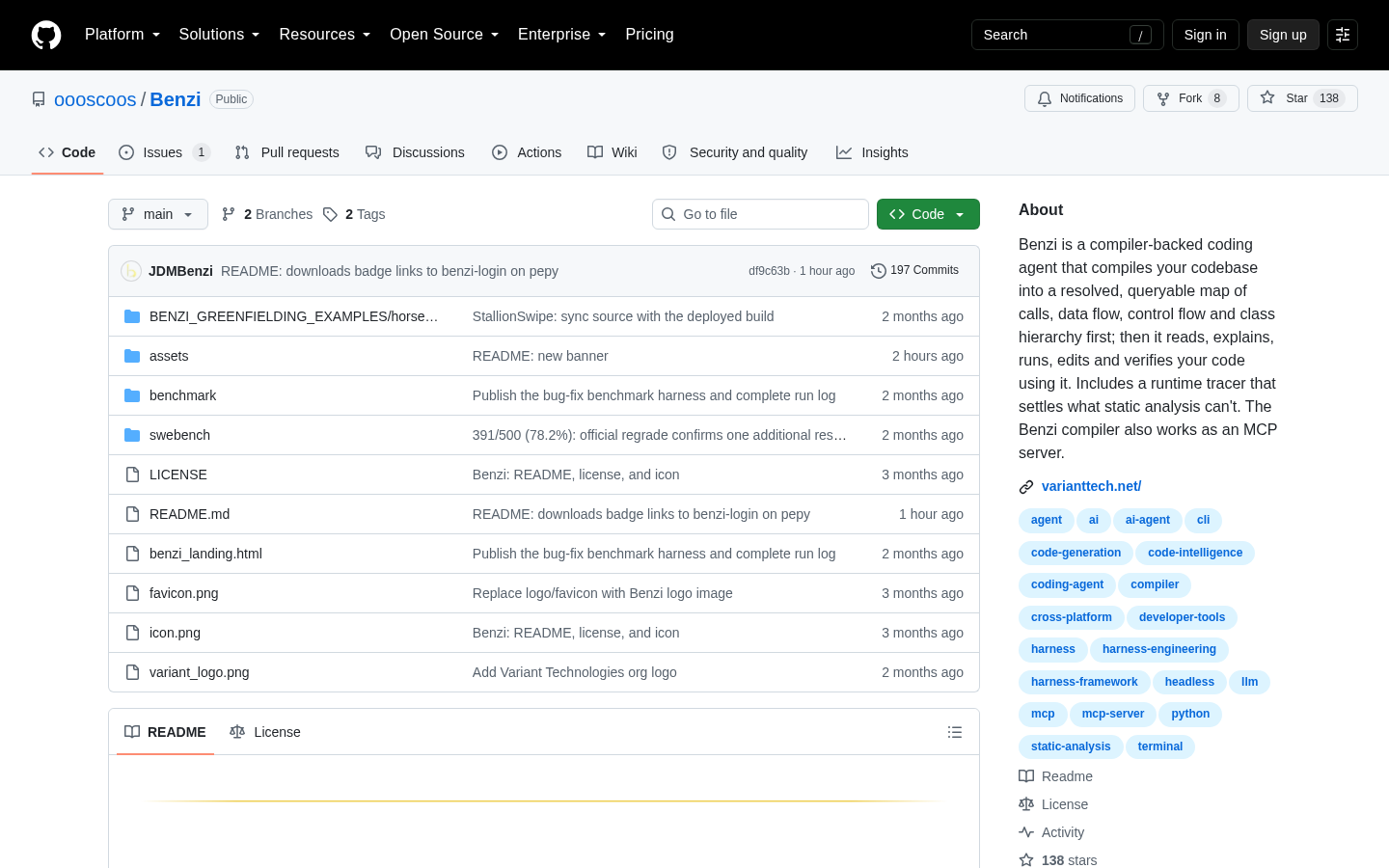
A Hacker News Show HN post by user tweedler290 introduced Benzi, pitched as code intelligence infrastructure for frontier AI models, hosted at github.com/oooscoos/Benzi. The post argues that today's two common context-gathering methods—snippet pulling and embedding-based symbol maps—both raise token count, add latency, and cause context drift. This explainer covers that problem statement only; the source cites no benchmark, pricing, or adoption numbers.
Disclosure: this article contains affiliate links. If you buy through them we may earn a commission at no additional cost to you. Our recommendations are based on the evidence recorded alongside this article, and prices were verified on the date shown.
Benzi is a project posted to Hacker News under the Show HN format, pitched as a response to how AI coding agents currently gather context from a codebase. This explainer is for developers evaluating AI coding-agent tooling who want to understand the problem Benzi says it's addressing, before any benchmark or track record exists. Skip it if you need a tool with verified performance numbers today — the Show HN post itself makes a problem statement, not a measured claim.
What changed and why it matters
A Hacker News Show HN post, published by user tweedler290, introduced Benzi, described as code intelligence infrastructure for frontier AI models. The project's code and page are hosted at github.com/oooscoos/Benzi.
What makes this worth a second look is the specific complaint the post raises, not a new feature list. It frames a problem that anyone running AI coding agents at scale will recognize: the methods those agents use to find and load relevant code are expensive in ways that compound as a codebase grows. That framing is the news hook here — a named problem, publicly posted, with a GitHub repo attached.
The detail
For a reader meeting this for the first time: AI coding agents and harnesses need to know which parts of a codebase matter for the task in front of them. According to the Show HN post, that currently happens one of two ways.
| Method | What it does | Cost cited in the post |
|---|---|---|
| Snippet pulling | Pulls relevant text snippets of code across multiple files and hands them to the agent | Increases token count, adds wall-clock time, contributes to context drift |
| Embedding-based symbol maps | Parses code into high-dimensional embeddings to approximate a symbol map, then hands that to the agent | Increases token count, adds wall-clock time, contributes to context drift |
Both approaches, per the post, share the same three costs: more tokens spent per request, more time waiting on the agent, and a higher chance the agent's working context drifts away from what's actually relevant. Benzi is positioned against that backdrop — the post frames the project as a response to this specific problem, not as a documented fix with published results. Nothing in the Show HN post or the linked repository, as captured here, states benchmark numbers, pricing, licensing terms, or adoption figures, so none of those are claimed in this piece.
If you want the primary source, the project and its description live at github.com/oooscoos/Benzi.
What it means for you
If you're building, extending, or hosting AI coding agents yourself, this kind of context-handling problem is a real line item: more tokens and more latency both show up directly in your infrastructure bill. That's true whether your agent uses snippet pulling, embedding-based symbol maps, or something newer like Benzi — the engineering cost sits underneath whichever tool is making the API calls.
Two practical next steps follow from that. First, the Show HN post frames snippet pulling and embedding-based symbol maps as the two ways existing AI coding tools gather context today — if that describes how your current assistant works, it's worth comparing it against other options before committing further budget to it.
Second, the infrastructure underneath these agents — compute, deployment, and the frameworks that run frontier-model workloads — is its own line item, and plans change. You can [see current pricing at Vercel](See current pricing at the merchant) to check what hosting an AI-agent workload actually costs today, rather than working from a plan limit you half-remember from a previous pricing page.
Neither step requires taking Benzi's problem statement on faith. It requires treating token count and latency as costs you can measure in your own stack, then deciding whether your current tool and current hosting plan are still the right fit for that measurement.
What this costs right now
Vercel
The last check on this price fell outside our freshness window, so no figure is shown.
Check the current price at VercelPrices move. We print the figure we read and the moment we read it, and suppress anything older than its window rather than guess at the current number.