Aura: A Permission-Constrained Rust Agent for Production Incident Response
A GitHub user named jvogt posted Aura, a Rust-based incident-response agent, to Show HN, built after the team tested Claude, OpenClaw, and LangChain against real outages. The team reports hitting context overflow, prompt-injection risks, hallucinated fixes, high token costs, and reviewer fatigue in those tools. This guide covers who should look at Aura, who should skip it, and what it means for the infrastructure decisions underneath it.
Disclosure: this article contains affiliate links. If you buy through them we may earn a commission at no additional cost to you. Our recommendations are based on the evidence recorded alongside this article, and prices were verified on the date shown.
Aura is for engineering teams who already run incident response through frontier-model agents and are hitting real limits: context windows filling up, hallucinated fixes, runaway token spend, and reviewers rubber-stamping every proposed action. It's a from-scratch alternative built for that exact failure mode, not a wrapper around an existing framework.
What changed and why it matters
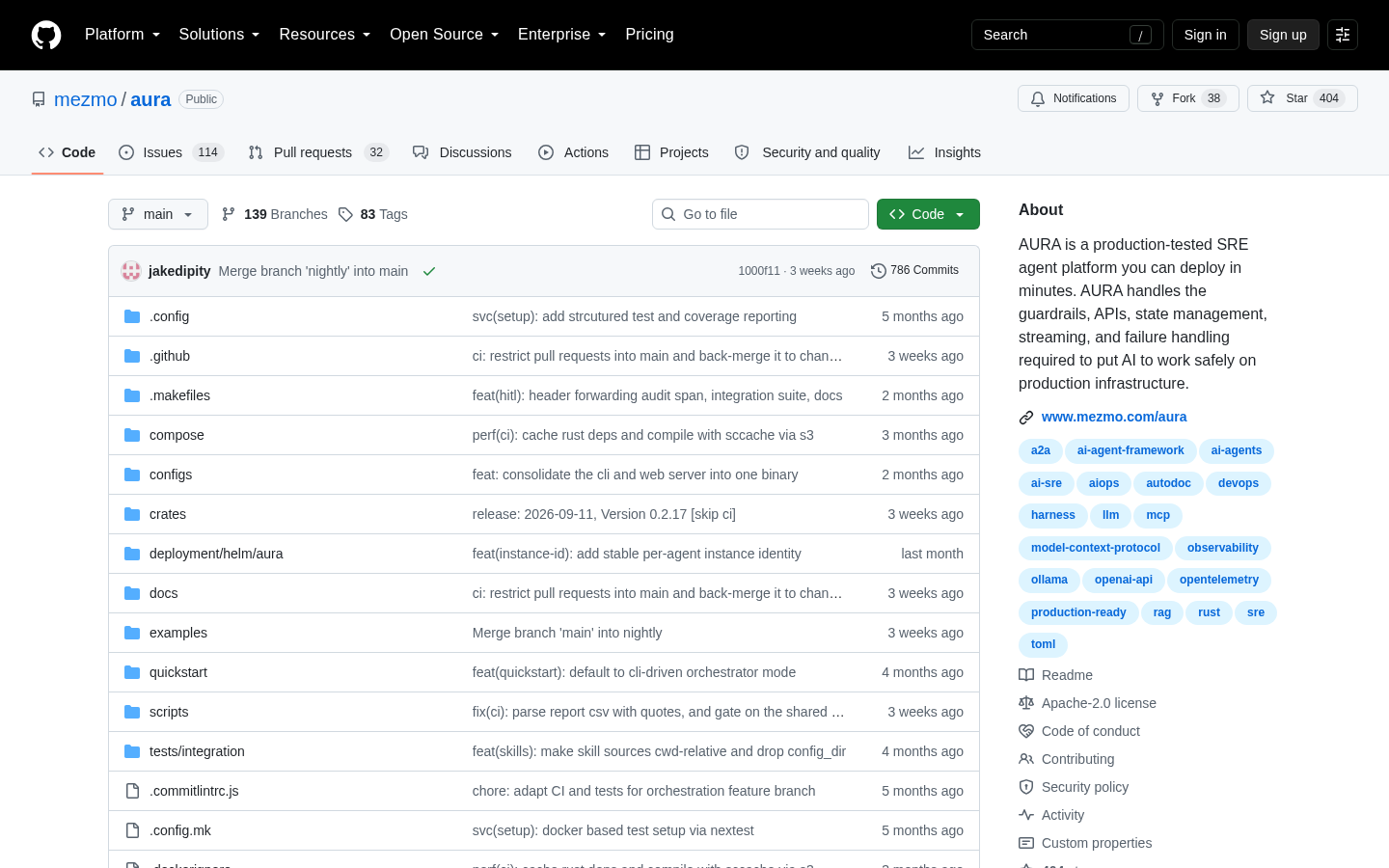
A GitHub user, jvogt, posted Aura to Show HN: a Rust agent that investigates and fixes production incidents. The code and documentation sit at github.com/mezmo/aura, and the post frames the project as the output of a team that runs incident response against a petabyte-scale SaaS — the kind of environment where a wrong automated fix has real blast radius.
That provenance matters more than the language choice. The team says it built Aura only after putting Claude, OpenClaw, and LangChain through actual incident-response work and running into the same failure modes repeatedly. For readers meeting this on Hacker News, that's the usual Show HN pattern: a team shares what it built because existing tools didn't hold up, then invites outside scrutiny of the code itself — scrutiny that matters more here because the tool is designed to act on production systems, not just suggest a pull request.
The detail
Aura's pitch is narrow: investigate a production incident, propose or make a fix, and do it without the problems the team says it kept hitting in general-purpose agent frameworks.
| Problem with prior tools (per the team) | What that means in practice |
|---|---|
| Context-window overflow | Long incident timelines and logs blow past what the agent can hold at once |
| 'Lethal trifecta' prompt-injection risk | Untrusted input (logs, tickets, alerts) can steer the agent into unintended actions |
| Hallucinations | The agent states a root cause or fix that isn't supported by the evidence it was given |
| High token spend on trivial tasks | Frontier-model pricing applied to work that doesn't need frontier-model reasoning |
| Reviewer approval fatigue | Humans stop reading agent-proposed actions carefully after enough repetitions |
The detail worth noting is what the team didn't do: it explicitly avoided relaxing production permissions to make the agent more autonomous. Aura operates inside a constrained permission model rather than being handed broad standing access to act on its own — the opposite of the 'give the agent more access so it can do more' instinct that shows up in a lot of agent tooling.
Best for: teams already running SRE or on-call workflows through LLM agents who've hit the specific failure modes above and want a purpose-built, permission-constrained alternative, not a general chatbot wrapper.
Skip it if: you haven't yet put an agent into incident response at all — the problems Aura solves are problems you recognize from experience, not from documentation alone.
What it means for you
If you're evaluating whether to run something like Aura, the decision isn't really about the agent — it's about the infrastructure you'll point it at. An agent that investigates and fixes production incidents needs production-grade compute and databases to act on, and the cost of that layer is a separate line item from the agent itself.
That's also where this intersects with a buying decision DigitalOcean serves directly: compute and managed-database tiers for the kind of infrastructure an incident-response agent would be watching and touching. Before you size anything, See current pricing at the merchant to see what the current compute and managed-database tiers look like, since none of those figures are fixed long enough to repeat from memory.
The decision point is simple: Aura is a signal that at least one petabyte-scale SaaS team decided existing agent frameworks weren't safe or cheap enough for production incident work, and built around a stricter permission model instead of a looser one. Whether that's the right call for your team depends on whether you've actually hit the failure modes it's solving — and on what it costs to run the infrastructure underneath it.
What this costs right now
DigitalOcean
The last check on this price fell outside our freshness window, so no figure is shown.
Check the current price at DigitalOceanPrices move. We print the figure we read and the moment we read it, and suppress anything older than its window rather than guess at the current number.