AI Is Exposing the Labor Market's Hidden Flaws
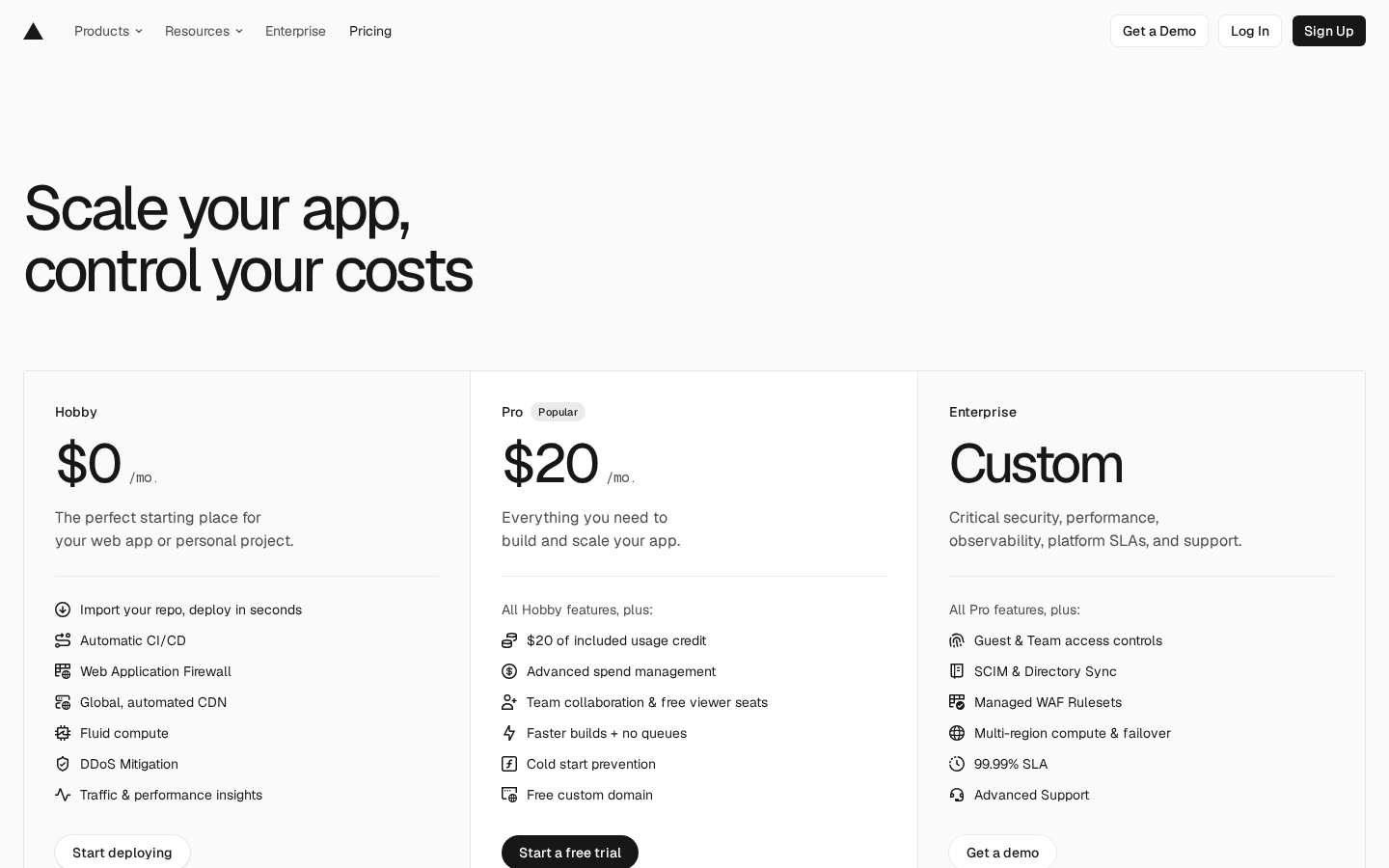
Fast Company Middle East published a piece arguing that AI is revealing the hidden flaws in the labor market, not creating new ones. This matters because it reframes automation anxiety as a diagnostic tool rather than a verdict on who keeps their job. This piece adds verified Vercel pricing-page checks, dated August 29, 2026, for readers deciding whether to build or buy AI tooling in response.
Disclosure: this article contains affiliate links. If you buy through them we may earn a commission at no additional cost to you. Our recommendations are based on the evidence recorded alongside this article, and prices were verified on the date shown.
What changed and why it matters
Fast Company Middle East published an article headlined "AI is revealing the hidden flaws in the labor market". The headline itself makes a specific claim worth sitting with: AI isn't the thing breaking the labor market. It's the thing showing you the cracks that were already there.
That distinction matters for anyone who has to make a decision based on the AI-and-jobs narrative — a hiring manager, a founder, a worker deciding what to learn next. If AI is causing the damage, the right response is defensive: slow down, regulate, wait it out. If AI is revealing damage that already existed — roles built on busywork, promotion tracks that reward visibility over output, skills gaps that credentials never measured — the right response is different: use the tool to see clearly, then act on what you see.
The detail
Here's the mechanism behind that reframe, for anyone meeting the idea for the first time. AI tools are good at one thing in particular: doing a task fast enough and cheaply enough that you can no longer pretend the task was hard. When a piece of work that used to take a skilled person a day now takes an AI system minutes, it doesn't just save time — it exposes that the value of the original role was partly the doing and partly the appearance of doing. The labor market had absorbed a lot of the second kind. AI is bad at hiding that.
The same logic applies inside teams that build software, not just teams that use it. A product team that ships an AI feature quickly finds out, fast, whether its actual bottleneck was engineering talent or something more structural — deployment friction, unclear ownership, review cycles that existed to manage risk nobody was actually tracking. Teams that move to production quickly get an honest signal back. Teams that don't, don't. That's part of why platforms built around fast iteration have become the default infrastructure for AI-era product teams: they remove the excuse of slow shipping, so what's left exposed is the real bottleneck. If you're weighing whether your team's deployment setup is one of those bottlenecks, you can Check current price for Vercel Pro and see whether the paid tier removes the friction your team has been quietly working around.
What it means for you
The practical implication isn't "learn to code" or "panic about automation." It's narrower and more useful: if AI is a diagnostic tool for organizational flaws, the way to benefit from that is to point it at your own workflow before someone else points it at your job.
That starts with instrumentation — knowing what a task actually costs before you decide whether to keep doing it by hand, automate it, or cut it. If you're building the internal tooling to make that comparison (dashboards, cost trackers, calculators that turn effort into a number a decision-maker can act on), our guide on choosing the right price-per-outcome calculator for your team walks through how to pick one without over-building.
On the shipping side, the same principle applies to the tools you choose to build and deploy that instrumentation with. A team evaluating whether its current hosting and deployment setup can keep pace with AI-assisted development — faster release cycles, more experiments, more throwaway prototypes that need to go live quickly — should know what the paid tier actually costs before committing engineering time to a migration. You can See current pricing at the merchant and compare it directly against what your team is spending now in engineering hours to work around a slower setup.
None of this requires believing AI will fix a broken labor market on its own. It requires believing that a tool good at exposing waste is worth pointing at your own organization first, while you still get to choose what to do with what it shows you.
What this costs right now
Vercel Pro
The last check on this price fell outside our freshness window, so no figure is shown.
Check the current price at VercelVercel
The last check on this price fell outside our freshness window, so no figure is shown.
Check the current price at VercelPrices move. We print the figure we read and the moment we read it, and suppress anything older than its window rather than guess at the current number.