Financialdata.net Stock API: Show HN Launch Explained
Financialdata.net launched on Hacker News on 2026-08-22 as a stock market API with a Python SDK and an MCP server, submitted under the username _FDN_. This piece separates what the Show HN post actually confirms from what it leaves unstated, including pricing, data coverage, and rate limits. It also covers the hosting decision developers face once they wire a Python SDK or MCP server into a live project.
Disclosure: this article contains affiliate links. If you buy through them we may earn a commission at no additional cost to you. Our recommendations are based on the evidence recorded alongside this article, and prices were verified on the date shown.
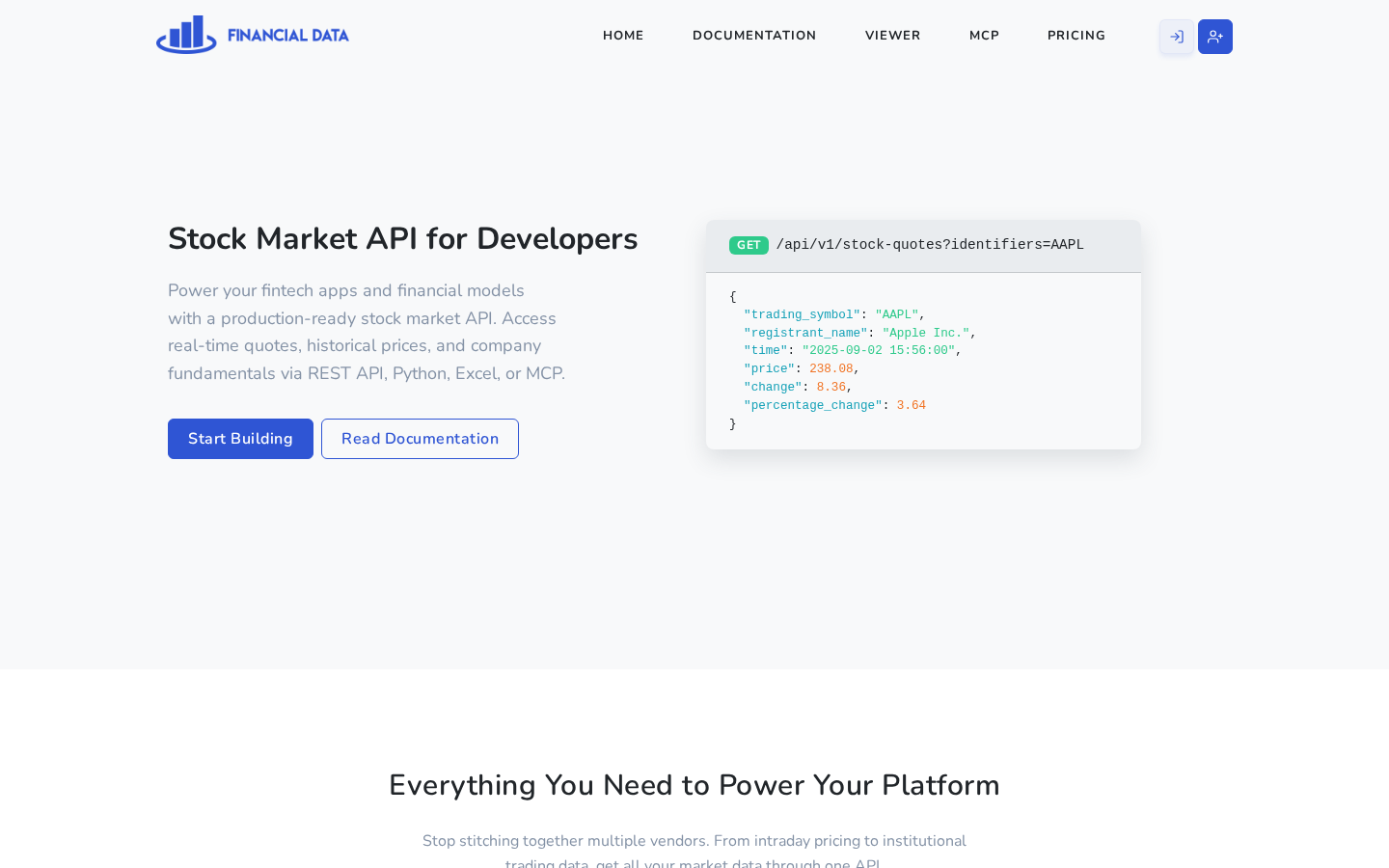
Financialdata.net surfaced on Hacker News on 2026-08-22 as a Show HN post: a stock market API bundled with a Python SDK and a Model Context Protocol (MCP) server. If you build trading tools, market dashboards, or AI agents that need price data, that combination is worth a five-minute look today — not yet a default to build on.
Show HN posts are self-reported and unvetted by design. What's confirmed at this point is narrow: the product is a stock market API, it ships a Python SDK, it ships an MCP server, and it was submitted by a user going by _FDN_. There's no independent record yet of uptime, data coverage, or cost.
What changed and why it matters
A new entrant with an MCP server is the actual news here, not the stock-data angle by itself — plenty of market-data APIs exist. MCP support means the API is built to be called directly by AI agents as a tool, rather than requiring a developer to hand-write the integration layer between a language model and the data source.
Paired with a Python SDK, that positions Financialdata.net for two audiences at once: developers writing conventional Python scripts against market data, and teams building AI agents that need to query stock data as part of a larger workflow. Both audiences are currently working from the same single source: the product's own Show HN announcement.
The detail
The Show HN post, titled "Show HN: Financialdata.net – Stock Market API with Python SDK and MCP Server," was submitted under the username _FDN_. The primary source for the announcement is the product's own stock-market-api page.
Two components are worth understanding if you're new to either term:
- Python SDK — a package meant to let you query market data using Python function calls instead of constructing raw HTTP requests by hand.
- MCP server — Model Context Protocol is the emerging standard that lets AI assistants and agents call external tools directly. An MCP server means an AI model can query Financialdata.net's stock data as a tool call, without custom glue code for that specific integration.
Here's what the Show HN post confirms versus what it leaves open:
| Confirmed by the Show HN post | Not stated in the evidence |
|---|---|
| It's a stock market API | Pricing or free-tier limits |
| Ships a Python SDK | Which exchanges or instruments are covered |
| Ships an MCP server | Rate limits, uptime, or historical data depth |
| Submitted by user _FDN_ | Company backing or track record |
Best for: developers who are comfortable evaluating an early-stage API against their own test case before committing — you'll run the Python SDK against a narrow query and judge the results yourself.
Skip it if: you need documented data coverage, rate limits, or an SLA before you start building. None of that is part of the public record from the Show HN post.
What it means for you
For most readers, the immediate decision isn't whether to sign up for the API — it's where the code that calls it will actually run. A Python SDK and an MCP server both assume something is hosting them: a script, a scheduled job, or an always-on agent process that needs to stay reachable and get redeployed as your integration changes.
That's a hosting decision, separate from the data-provider decision, and it's worth treating it that way. If you're weighing where to deploy the service that wraps this API — a small Python backend, a cron job, or a process that serves MCP requests to an agent — See current pricing at the merchant to see what a deploy-first platform charges for the compute and function tiers that kind of integration typically needs.
Before you commit to a hosting platform, our developer-tools buying guide walks through how to weigh options once you know whether your workload is a long-running server, a scheduled job, or serverless functions — the same decision this API's SDK and MCP server put in front of you.
The decision in front of you today is small: pull the Python SDK, run it against one real query, and confirm it returns what you need. Treat the MCP server as a bonus for agent workflows, but hold off on production infrastructure until pricing and data coverage are public.
What this costs right now
Vercel
The last check on this price fell outside our freshness window, so no figure is shown.
Check the current price at VercelPrices move. We print the figure we read and the moment we read it, and suppress anything older than its window rather than guess at the current number.