Ask HN's 'Deauthentication Attack Script' Post: What It Says, and What It Doesn't
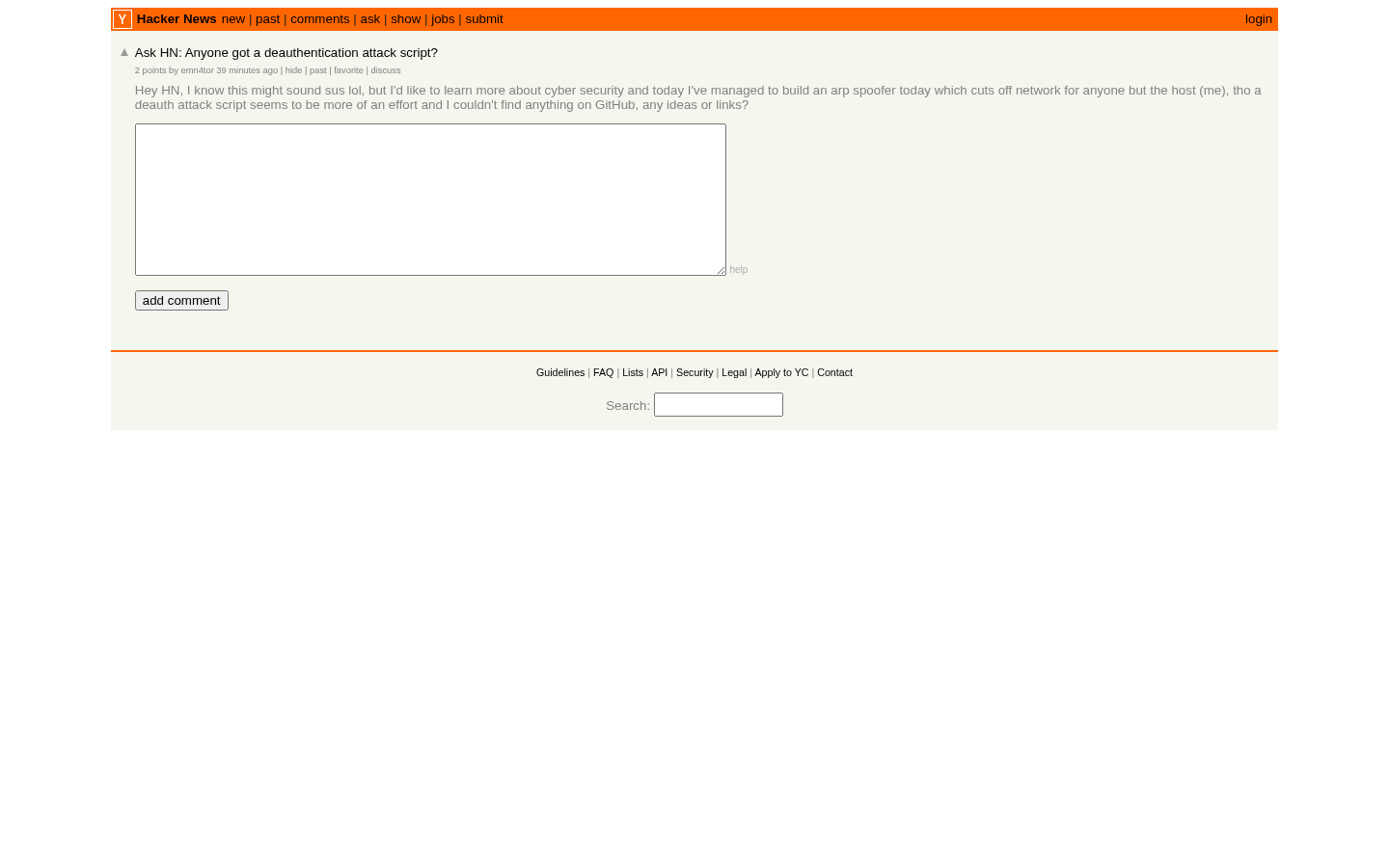
An Ask HN post titled "Anyone got a deauthentication attack script?" was published by user emn4tor on Hacker News. In it, emn4tor describes having built an ARP spoofer that blocks network access for everyone except the host, then asks for a deauthentication script after finding none on GitHub. This explainer covers what the post says, what it does not provide, and where it points readers evaluating security tooling or hosting for a related project.
Disclosure: this article contains affiliate links. If you buy through them we may earn a commission at no additional cost to you. Our recommendations are based on the evidence recorded alongside this article, and prices were verified on the date shown.
What changed and why it matters
This explainer is for developers following Hacker News for security-tooling context, not for a working deauthentication script — none is provided here or anywhere in the thread itself. An Ask HN post titled "Anyone got a deauthentication attack script?" is live at item 49314649, posted by user emn4tor.
The post itself is the news hook: a developer who already built a working ARP spoofer is now hunting for the next tool in a self-taught security project, and landed on Hacker News after a GitHub search came up empty.
That's a small, checkable data point about how developers route around a search dead end. When GitHub doesn't surface a usable tool, HN's audience often fills the gap — the same behavior pattern that sends developers to HN for library recommendations, deployment platforms, and pricing comparisons before they commit to anything.
For a reader who isn't in security research, the value of the thread is procedural rather than technical. It shows how a specific, unresolved gap on GitHub turns into a public discussion, and how that discussion becomes a data point other developers can search for later. The username, the two tools mentioned, and the stated reasoning are all drawn directly from the post.
The detail
emn4tor's post lays out exactly where they are. They built an ARP spoofer that cuts off network access for everyone on a local network except the host machine — a meaningful first project, since building one from scratch means understanding how devices resolve each other's addresses on a LAN well enough to intercept and redirect that traffic.
The tool they're after next, a deauthentication attack script, is described in their own post as the logical follow-up in that same learning path. They say they couldn't find a working script on GitHub, which is why the question ended up on Ask HN instead of a repository's issue tracker.
Two things are worth separating here. First, the technical curiosity: someone building network tooling for a home lab or self-directed study is a recurring, well-documented pattern on Hacker News. Second, the boundary: any tool that disrupts other people's network access carries real legal exposure the moment it's pointed at a network you don't own or don't have explicit permission to test. The Ask HN thread doesn't resolve that tension — it documents that the request was made, by whom, and why, without endorsing a build path for either tool. Nothing here is inferred beyond what emn4tor wrote in the original post.
If you're deciding which security tools are worth learning next, a cybersecurity buying guide is a more reliable next stop than an unverified GitHub script — it separates maintained, reputable projects from abandoned repos before you install anything. And if the project you're building eventually needs somewhere to live online — a write-up, a small dashboard, a demo page for the tooling you ship — you can Check current price for Vercel Pro before you decide whether a paid tier is worth it for a solo project.
What it means for you
If you're reading this thread because you're on a similar path — learning network security by building your own tools — treat the ARP spoofer and the deauth-script request as a signal of scope, not a shopping list. Build and test against hardware and networks you control. Public threads like this one are a reasonable way to get peer input before you run anything against a live environment.
The practical bridge from this thread to a buying decision is hosting, not hacking. Developers who build tools like these typically end up shipping something around them: documentation, a small dashboard, or a portfolio entry describing the project. Vercel is one of the deployment platforms that comes up repeatedly in that workflow among HN's developer audience.
Matching your hosting plan to the size of what you're actually building matters more than which brand you pick first. A single script that generates network traffic for local testing doesn't need a live deployment. A dashboard that visualizes results for other people to see does. That's the line to draw before you compare vendors, not after.
| Your situation | What to do |
|---|---|
| Single script, runs locally, no web component | Skip hosting — nothing to deploy yet |
| Planning a docs site, dashboard, or results page for the project | Compare hosting plans before you build, not after |
| Already have a GitHub repo but no live demo | A free-tier deploy is usually enough to start |
Before you commit a project to any host, you can See current pricing at the merchant so the plan you pick matches how much you're actually deploying, rather than guessing and switching later.
Skip a paid hosting plan if your project stays a single script you run locally and never intend to expose as a web app. It's worth the click if you're already planning to publish a dashboard, results page, or documentation site alongside the tool, and want to compare what a Pro tier includes against the free option — that comparison is the whole reason to check pricing before you build rather than after.
What this costs right now
Vercel Pro
The last check on this price fell outside our freshness window, so no figure is shown.
Check the current price at VercelVercel
The last check on this price fell outside our freshness window, so no figure is shown.
Check the current price at VercelPrices move. We print the figure we read and the moment we read it, and suppress anything older than its window rather than guess at the current number.